about
Putting the humans on the judgement, and the machines on the busywork.
biography
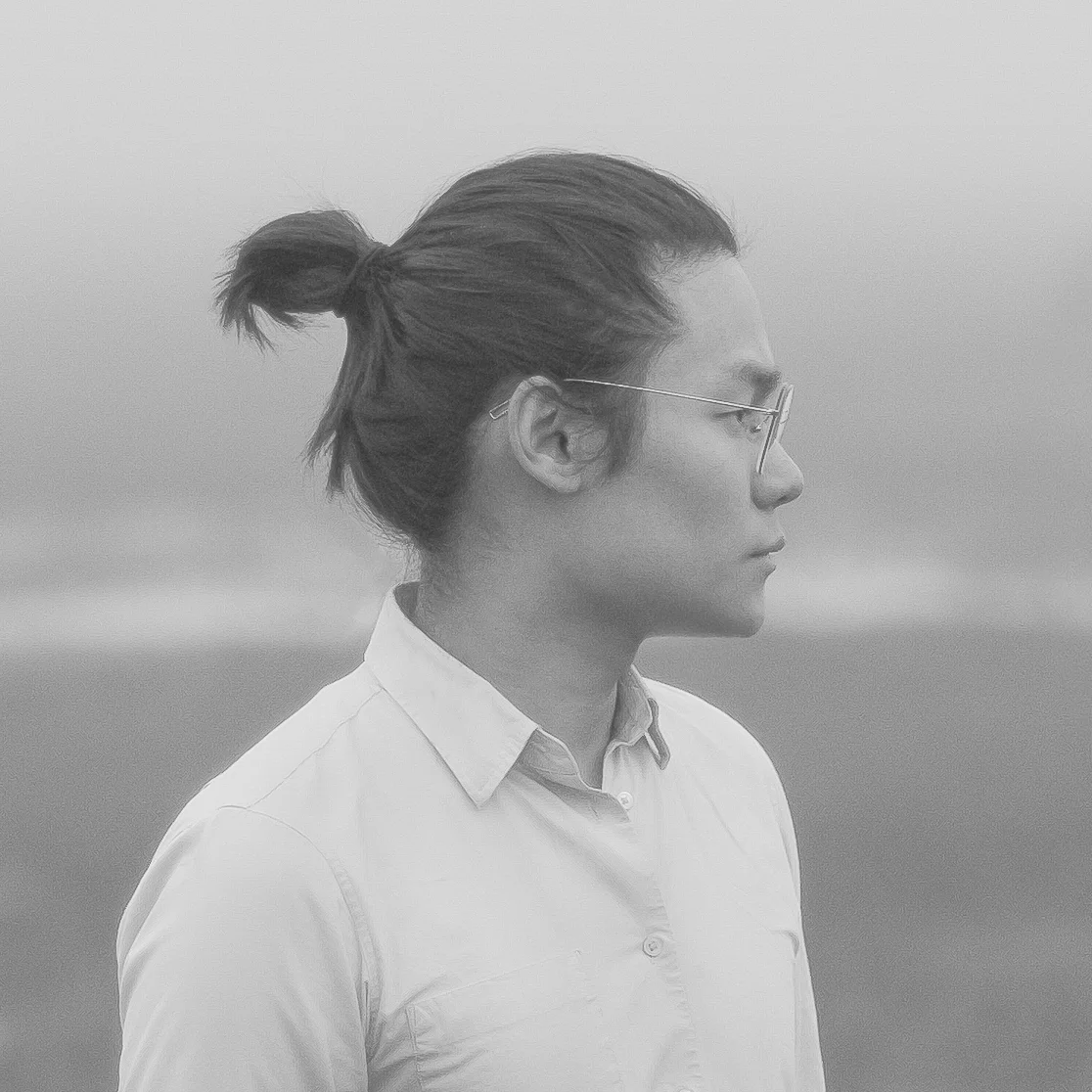
I’m a service and product designer in Vancouver, and the founder of Human, an online teaching platform.
Most of what I make now is tooling: systems that hand a workflow’s routine half to a machine and keep a project’s standards in one place instead of in my head.
Human sells lessons, and what it is for is the habit underneath them: thinking carefully, and engaging honestly with knowledge, with other people, and with yourself. The tools came out of that teaching and stayed, and each of them draws the same line I draw inside a service: the machine drafts, a person decides. I use AI all day and I hand it none of the judgement. It is good at the half of a job that is copying, reformatting and remembering. It is also accountable to nobody. So the other half stays with someone who is. Placing that line is a large part of what I now think service design is. Which calls can a system make on its own, and which have to stop and wait for a person?
So what I circle now is service design, systems design, and the business case that has to hold both of them up. Most organizations lose their best people to administration. The copying between boards, the chasing, the reformatting, the small confirmations nobody remembers agreeing to. None of that needs a person. Planning for other people needs one. I want to build systems that handle the first pile on their own and give the hours back to the second, without quietly taking the decisions along with the work.
The habit came from eight years of teaching, in Vancouver classrooms and online to learners across three time zones. The job was watching someone try to make sense of something complicated and rebuilding the material at the point their attention broke. I still do that, on services instead of lessons.
Away from the work I write stories and teach other people to write them. I watch a lot of films. I live with a rabbit named Jojo.
And I take photographs, mostly of water and weather within an hour of the city, which is the only thing I do that asks me to stand still.



what I'm looking for
Service design or product design, in a small consultancy or an in-house team, in Vancouver, permanent or on contract. Education, public sector, and health are where I want the work, and the projects I would most like to spend the next few years on are the ones touching reconciliation or accessibility.
how I work
-
Reach for a service blueprint when the problem starts before any screen, and wireframes once it lives on one.
-
Treat frontline staff as co-designers from the first session. The knowledge is already in the room; the job is to make space for it.
-
Prototype as research. A prototype is a question put to the people who will actually run the service, and the answer usually costs you the design you arrived with.
-
Treat handoff as a design problem. Test the documentation on the people who will use it, like anything else.
-
Ask what the platform can actually do before drawing the screen. A design that ignores the build comes back, and the developer is right to send it back.
where I’ve learned
-
2026
Emily Carr University of Art + Design
UX Design Certificate
interaction design, user research, design thinking, service design
-
2025
Google / Coursera
Google UX Design Professional Certificate
user research, wireframing, prototyping, usability testing, design systems
-
2024
University of British Columbia
Bachelor of Education (BEd)
instructional design, assessment design, learner observation, educational psychology
-
2018
University of British Columbia
Bachelor of Arts, English Literature
critical analysis, rhetoric, research methods, technical writing
-
2017
Cambridge University (CELTA)
Certificate in English Language Teaching to Adults
needs analysis, materials design, learner-centred instruction, language assessment
speaking & community
-
2024
Sir Winston Churchill Secondary
Professional Development for Teachers
Two engagements, not one. A 35-minute lunch-and-learn on 19 April introduced staff to generative AI, and the school’s official professional-development workshop on 17 May ran to three sessions, after my practicum had ended. Adults, a prepared topic, and nobody obliged to be in the room.
-
2024
University of British Columbia
Generative AI for Teacher Candidates
I organized this one and invited the speakers. Four other Teacher Candidates showed the AI tools they actually use, and the rest of the room, fifteen or so, brought their own. What a language model is, how a prompt is put together, using one to draft a summative assessment against the curricular competencies, and what the detection tools claim they can do.
-
2024
UBC Faculty of Education
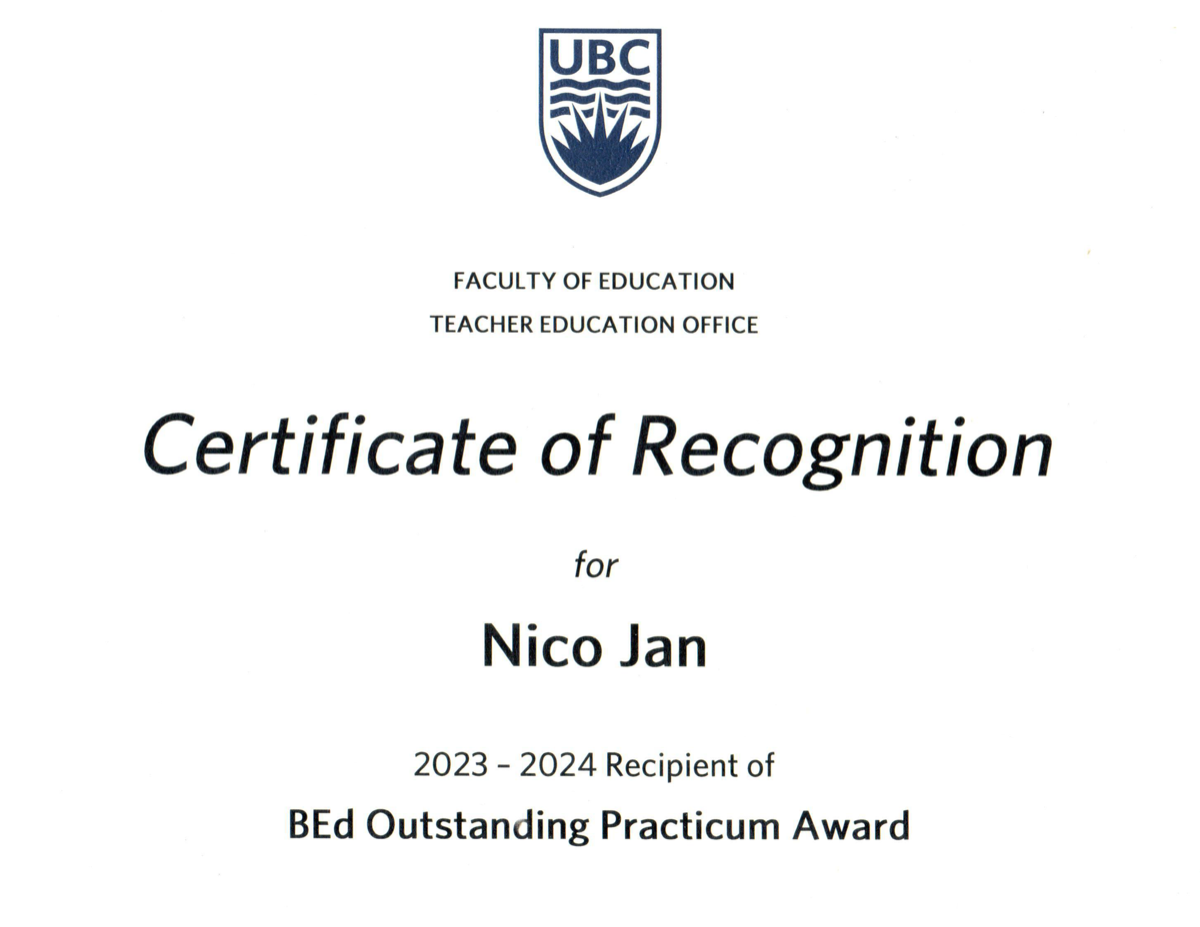
BEd Outstanding Practicum Award
The Faculty of Education named me its 2023 to 2024 recipient. My inquiry that year asked what the relationship is between how I run a class, the media I use, and what students retain. My faculty advisor’s assessment landed on the answer I had been tracking week to week: the unconventional formats were the ones students engaged with and remembered.
-
2026
FLUI
A rebrand for Second Savour, pitched back to the client
With a team, I redesigned Second Savour’s logo and website, then presented the work to the client. The pitch spent as much time on the process as on the artefacts, because what a client is really buying is the reasoning that will still be there the next time something needs deciding.
-
2026
BC Service Design Jam
A privacy product, designed without a screen
With a team of designers I ran a design process end to end, from research through prototyping to the presentation, and we came out with a concept for protecting people’s private information. No digital tools were allowed at any stage, so the research was conversations and the prototype was something you could pick up.
