Designing comprehension: eight years of making hard ideas reachable.
For eight years I found where understanding broke down, rebuilt the material, and tested whether the fix held. The same loop service design runs on.
Harry had seen the diagram of his own heart more times than he could count.
He had the textbook and still could not trace the blood through it. A change of context did what better words could not.
So I stopped explaining. I pressed down on a vein in my own arm, cleared it, and let him watch the valve refuse to let the blood run backward. His face shifted, though my words had been no better than the textbook’s.
That was the smallest version of eight years of the same work: literary analysis to fifteen-year-olds, the politics of Animal Farm, IELTS and SAT preparation, in Vancouver classrooms, an IB World School, and BC offshore schools in China. The content changed every time. The move did not.
The hard part was the distance between the content and the student.
Once teaching became a design problem, the question shifted from explaining an idea to making it reachable.
The material I was handed was abstract, or distant, or both. The students were fifteen, or reading in a second language, or sitting an exam that decided which university would take them. The syllabus assumed a scaffolding most of them did not have.
a short story from 1948
Shirley Jackson’s “The Lottery”, read for what it says about who a community agrees to sacrifice. Fifteen-year-olds read the plot and stopped at the plot.
What changed: the framing, tuned to what each class already knew from their own social and cultural lives, so the ritual on the page had something to sit against.
a totalitarian state told through farm animals
Animal Farm only works as an argument if you can see what it is an argument about, and the allegory is doing the hiding.
What changed: I taught the thing being alluded to. The Russian Revolution first, then propaganda techniques by name, so the animals became evidence for a claim the students could already state.
an organ you cannot watch working
A valve is defined by movement, and every diagram of one is a still picture. The cross-sections had already failed him.
What changed: I pressed on the vein in my own arm so he could watch a valve stop the blood going backwards. Then he told me the route himself.
I worked mostly alone, because the tailoring had to stay in one place.
Watch where a student stalls, rebuild the material that night, test the change the next day.
For most of the eight years I designed and taught solo; in schools, alongside a coordinating teacher and inside a timetable I did not control.
- Observed where comprehension broke down, lesson by lesson.
- Interviewed students about where the reading and the writing failed them.
- Built unit plans, lesson sequences, handouts, assessments, decks.
- Tested with formative checks, weekly anonymous feedback, and the next day’s class.
- Handed off the resource library and a set of staff workshops.
I ran the classroom as a research question.
Formative checks, exam results and a weekly anonymous survey pointed one way: students held on to the formats that did not look like school.
My certifying practicum had one inquiry behind it: what is the relationship between how I engage a class, the media I use, and how students respond? Each format was a variant I could read a response to: gamified review, circle discussion, slide decks, quizzes. The answer came back consistent. Every class then opened the same way: students rated their day on a row of mood icons at the door, so no lesson began on an assumption about the room.
The four instruments 1 table
| the instrument | what it read | its limit |
|---|---|---|
| formative checks, mid-lesson | Whether the idea had landed while there was still time to change the lesson. | Reads the room rather than the individual. |
| summative results, after | Whether it held under assessment conditions. | Arrives too late to act on for that class. |
| weekly anonymous survey | Which formats students would say had worked, without having to say it to me. | Self-reported, and a popular lesson is not always an effective one. |
| mood icons at the door | The state of the room before I started, so the plan could bend to it. | Evidence about that day only. |
The unit plan was a service blueprint. I just did not have the word for it yet.
I redrew a nineteen-lesson unit: two actors, timed steps, and a check line under every lesson.
My English 10 unit ran nineteen lessons over four weeks. Two columns set what a student would be able to do beside how I would know they could. A lane held the learners who needed the material adapted. And under every lesson ran a timed sequence split between what I did and what the student did. Frontstage and backstage, durations, a measurement line.
15 min
20 min
20 min
20 min
To make an abstract idea land, I changed its form.
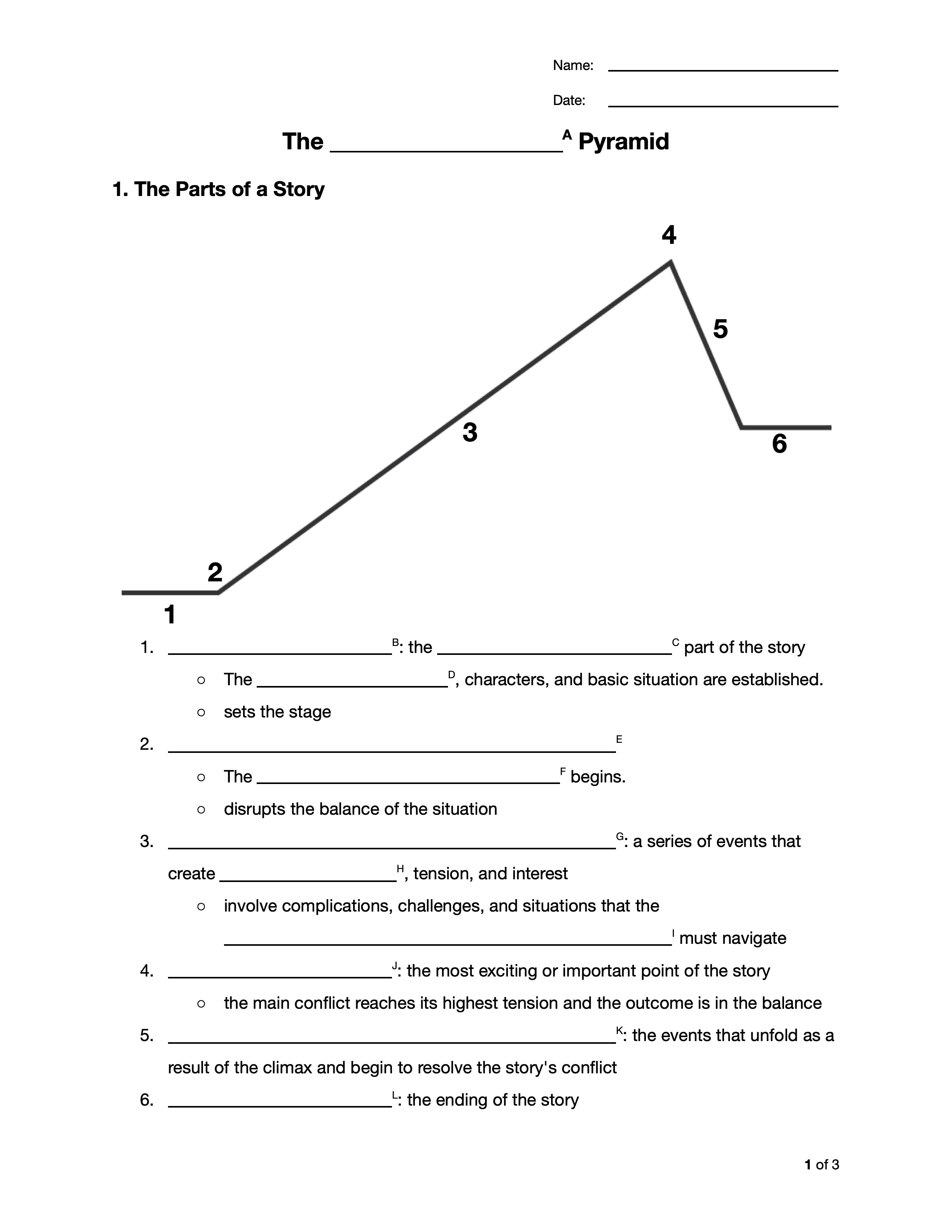
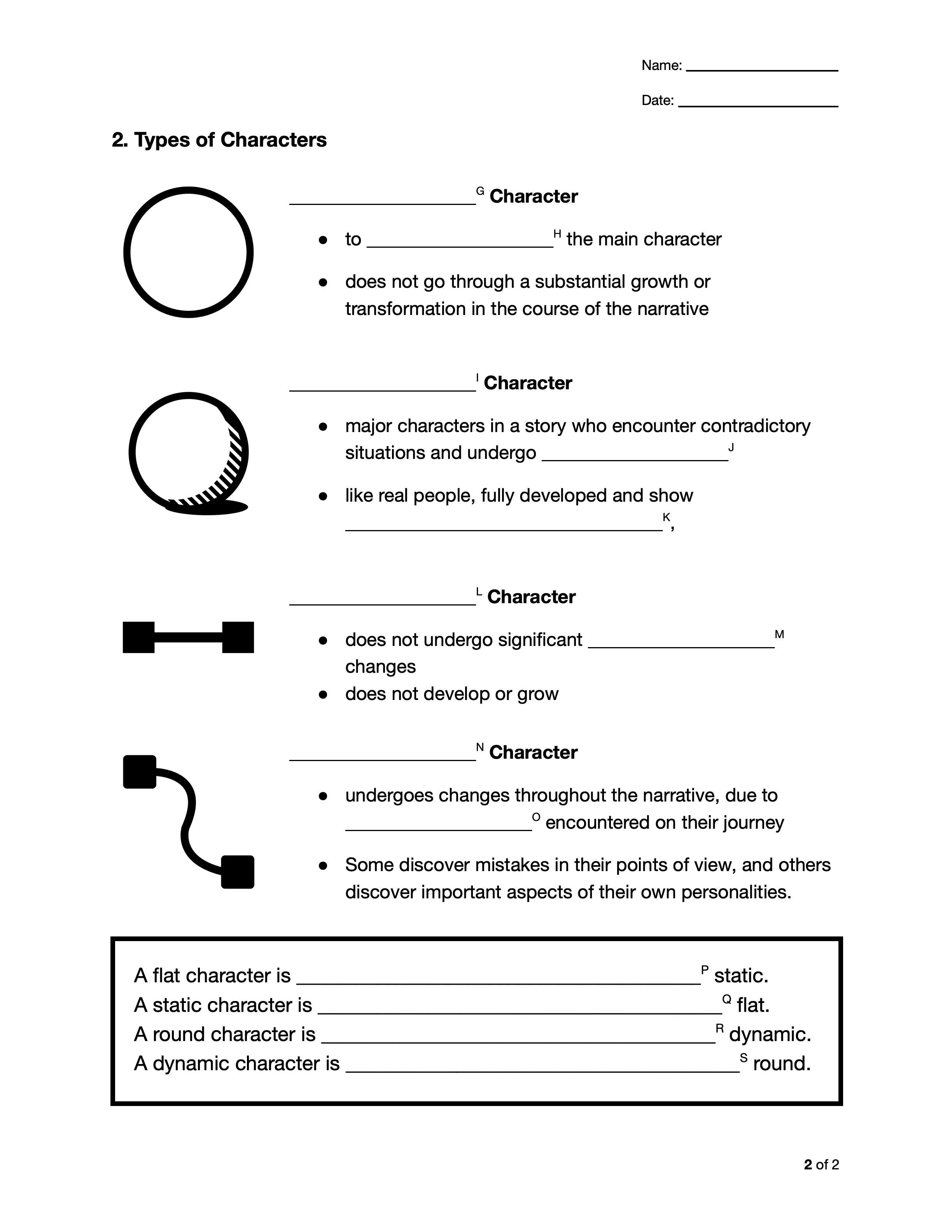
A protagonist became a head-to-head matchup; a story arc became a line you can trace.
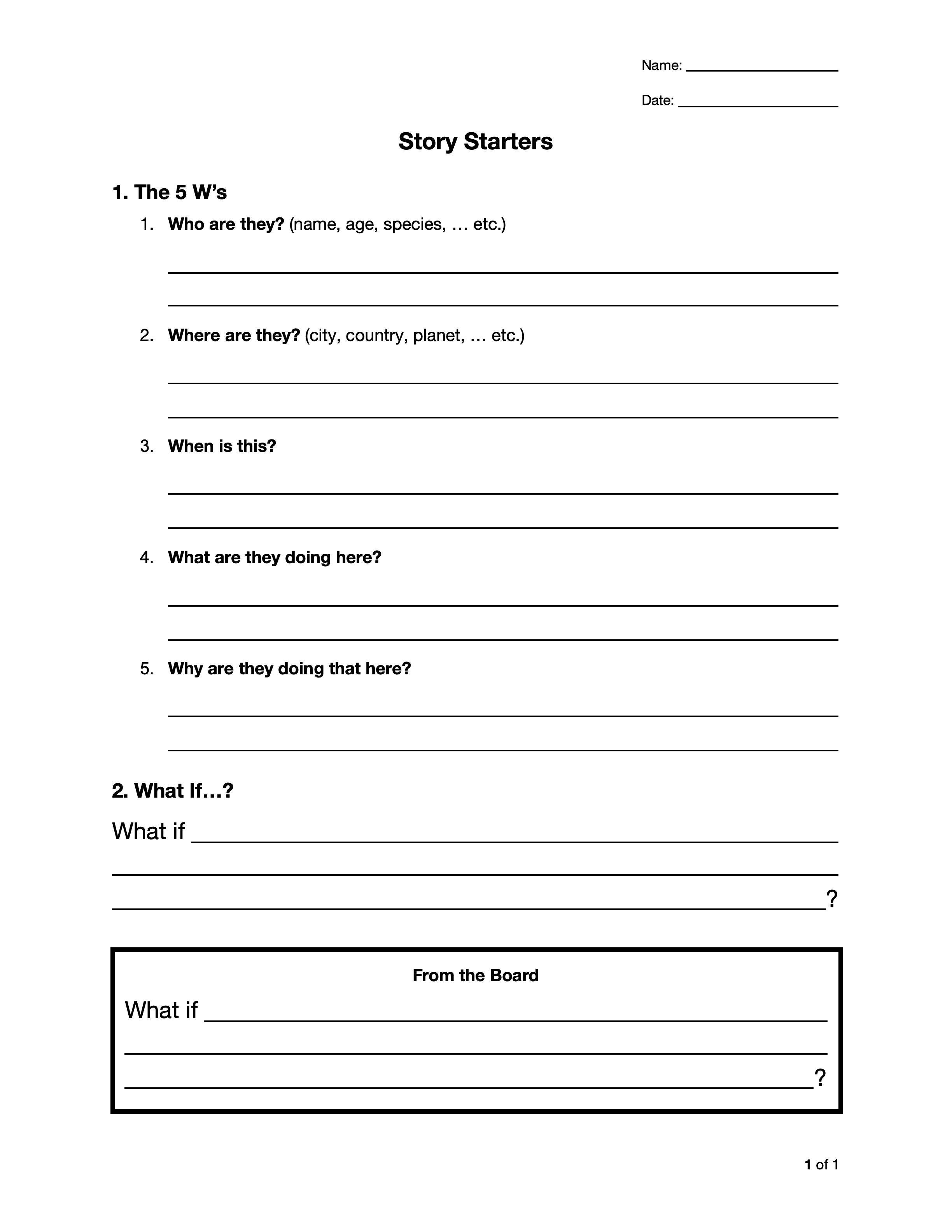
A protagonist is an abstract idea, so I taught it through a short film the class already loved: rank the characters from least to most likely to be the lead, argue about it, and only then get the term. Round or flat, static or dynamic became a head-to-head matchup, because the grammar of a video game was already theirs.
The content stayed the BC curriculum. The form belonged to the students, and I retuned the examples to whoever was in the room, because an example only works if the person reaching for it has somewhere to stand.
| the idea | the form I gave it | why that form |
|---|---|---|
| protagonist | Rank the characters, then argue | They reached the term themselves, before I named it. |
| round or flat, static or dynamic | A head-to-head matchup | The grammar of a video game was already theirs. |
| point of view | Three plain cards | Three options you can hold at once beats a definition. |
| conflict | Person against person, self, world | Named oppositions are easier to test a story against. |
| story structure | One line that climbs to a star, then drops | A shape you can trace holds where a list you memorize does not. |
I taught the formula, and then I taught when to break it.
I designed where curriculum, exam board, school and guardian all pulled, and taught understanding over a memorized template.
The hardest calls came when two of them wanted different things: an exam board that rewards a template against a student who will need the understanding a year later.
Who every lesson answered to 1 map
Core Competencies, Big Ideas, and First Peoples’ Principles of Learning.
A coordinating teacher, and a timetable I did not control.
Where all four met. The one I designed for.
IELTS, SAT, and Cambridge: the score that gated university.
Progress and attendance, plus the conversation waiting at home.
Writing instruction is almost always formulaic, and the fast path is to drill the template. I took the slower one: teach the structure, then why it works, where it fails, and how the move underneath it (make a claim, support it, answer the objection) carries into a cover letter, a budget request, a difficult conversation.
the fast path
drill the templateThesis and three reasons, the five-paragraph shape, rehearsed until a student can reproduce it under exam pressure. Reliable marks, and nothing underneath them.
the path I took
teach the formula, then when to break itSlower, and it risks the score the exam board gates university on. It produces a writer who can tell when the shape is wrong for the argument.
For test preparation that was a real risk: the exam rewards the template, and the template alone can pass it. I bet that students who understood why the structure works would outperform students who had only memorized it. On the IELTS and the SAT, they did. A template gets a student through Friday. The understanding stays for years.
What the students kept, and what the school kept after I left.
IELTS bands from the 7 that opens a university application up to a 9, and a resource library the department kept.
Others finished the IB programme and went to the universities they were aiming for.
The practice did not leave when I did. I handed my resource library to the department and ran staff workshops on AI. May Ng, my faculty advisor at UBC, assessed the practicum and recorded the result I had been tracking week to week: it was the unconventional formats students engaged with and remembered.

“Nico’s practicum performance has been outstanding, and I am delighted that he taught my classes. Nico is a welcome addition to any school, and I would gladly welcome him as one of my colleagues.”Jennifer Wong, School Advisor, Sir Winston Churchill Secondary
What I would do differently: I waited too long to trust a weak signal.
I used to treat one miss as noise. It never was.
For years I waited for a problem to repeat before acting on it. One student stumbling, I noted; three stumbling the same way, I redesigned. That is safe, it is slow, and the cost is the first two students. I have since learned to trust the first clear miss.
Lately I use AI to read a single piece of student work closely and show me where understanding is fraying, well before it would surface as a pattern in the grades. It cannot make the judgement that matters most: whether the idea landed. That I still have to see for myself, in the half-second a student’s face changes.